
The thunderstorm rolls through Sterling Heights around dinnertime. There’s one close crack of thunder, the lights blink, and everything comes back on. A few minutes later you notice the microwave display is dead, or the router won’t power up, or the TV in the basement is stuck on a black screen. Nothing looked damaged. Something clearly was.
That’s the classic power surge, and it’s the reason homeowners ask us, “What does a whole-house surge protector actually do?” In this guide we’ll cover what surges are, where they really come from, what a panel-mounted device covers (and what it can’t), and how to decide whether it’s worth it for your home. If you’d rather have a pro look at your panel, our home surge protection systems page explains how we install them.
What a power surge actually is
A power surge, also called transient voltage, is a sudden and unwanted increase in voltage. According to the Electrical Safety Foundation International (ESFI), a spike like that can damage, degrade or destroy the sensitive electronic equipment in your home. The damage isn’t always dramatic. ESFI also notes that repeated small surges may slowly wear down your electronics and shorten the life of the appliances involved. So a TV that dies in year four may not have been “a bad TV”; it may have been absorbing hits for years.
Surges are brief, but modern appliances are built around circuit boards that don’t tolerate voltage above what they were designed for. An excess of voltage can arc through the components and generate enough heat to damage them.
Where surges come from (it’s not just lightning)
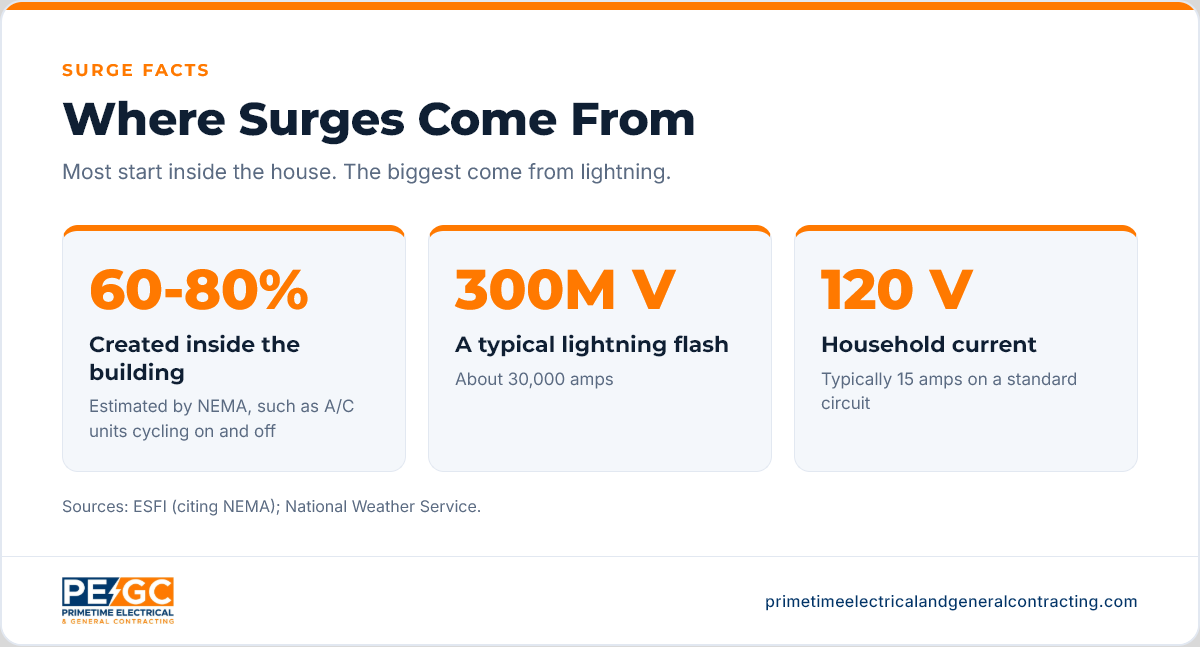
Most people picture lightning, and lightning does cause the most powerful surges. But ESFI points out that the National Electrical Manufacturers Association (NEMA) estimates that 60 to 80 percent of surges are created inside a building, for example when large appliances such as air conditioners turn on and off. The rest can come from the electric utility itself during switching on the power grid, and from lightning.
That’s a useful reality check for a Macomb or Oakland County summer. Between thunderstorms and a central air conditioner that cycles all afternoon, your electrical system gets stressed in more than one way. If your lights dim every time the AC kicks in, that’s a related symptom we explain in why lights flicker when the AC turns on.
The three kinds of protection, and what each one covers
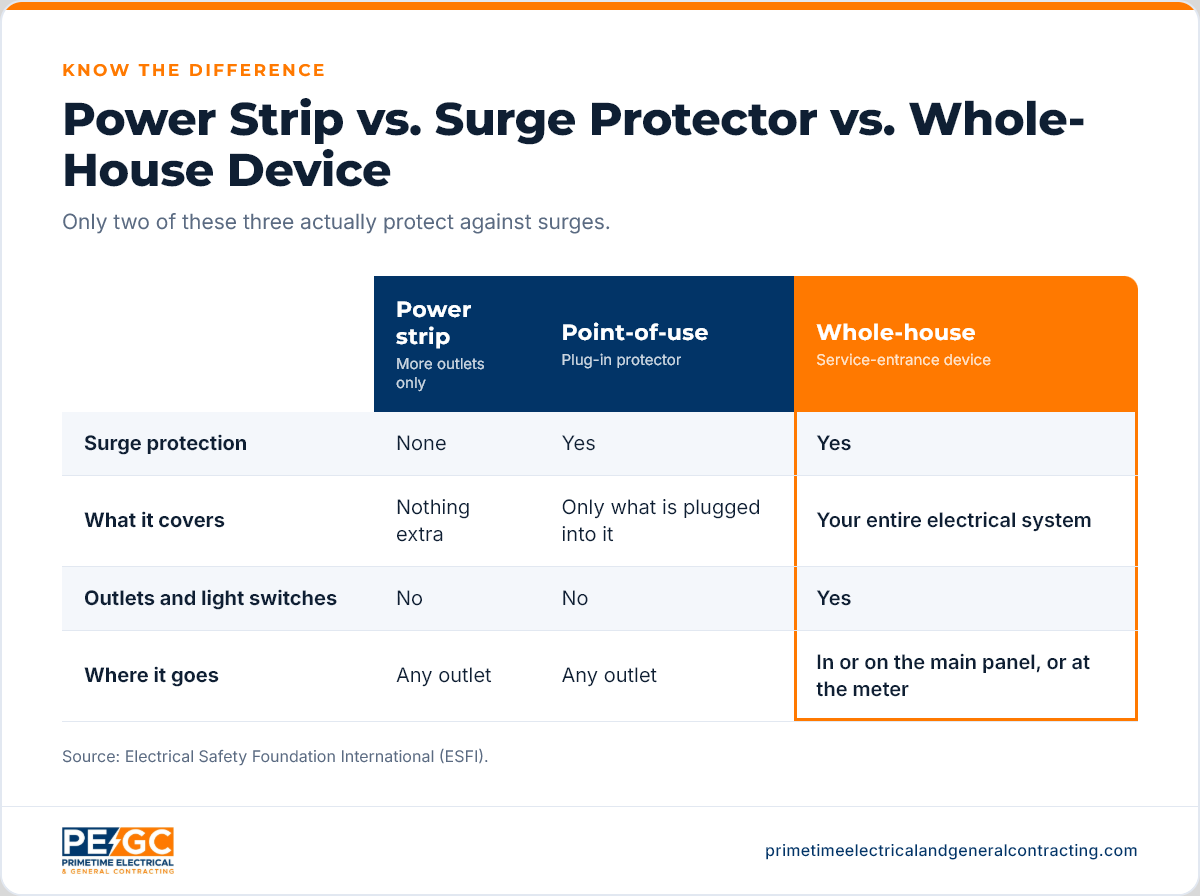
When people say “surge protector,” they’re usually talking about one of three very different things. ESFI draws the same distinctions:
- Power strips. A plain power strip gives you more outlets and nothing else. ESFI is blunt about it: power strips do not provide surge protection. They also don’t add power; they just give you more access to the same limited capacity of the circuit they’re plugged into.
- Point-of-use surge protectors. These protect only the items plugged directly into them by diverting the surge to ground. ESFI recommends choosing models with an indicator light or audible alarm that tells you when the protector needs to be replaced.
- Service-entrance (whole-house) devices. These are mounted in or on your main electrical panel, or at the base of the electric meter, and protect your entire electrical system. ESFI points out that this device covers things you can’t plug a protector into, such as the outlets and light switches themselves.
The practical takeaway: the layers work together. A whole-house device knocks down the big hits at the panel, and a good point-of-use protector at the TV, computer or home office adds a second line of defense for the equipment you care about most.
What a whole-house surge protector can’t do
We want to be straight about the limits, because a lot of marketing glosses over this. ESFI states that no surge protection device can handle a direct lightning strike. The National Weather Service explains why: a typical lightning flash is about 300 million volts and about 30,000 amps, while ordinary household current is 120 volts and 15 amps. The NWS also says plainly that typical surge protectors will not protect equipment from a lightning strike.
So what’s the benefit? Most surges aren’t direct strikes. A device at the panel is aimed at the far more common, smaller events: the surges that come from utility grid switching, and the internal surges from your own big appliances. It reduces how much of that reaches the wiring and electronics in your home. It does not make your house lightning-proof.
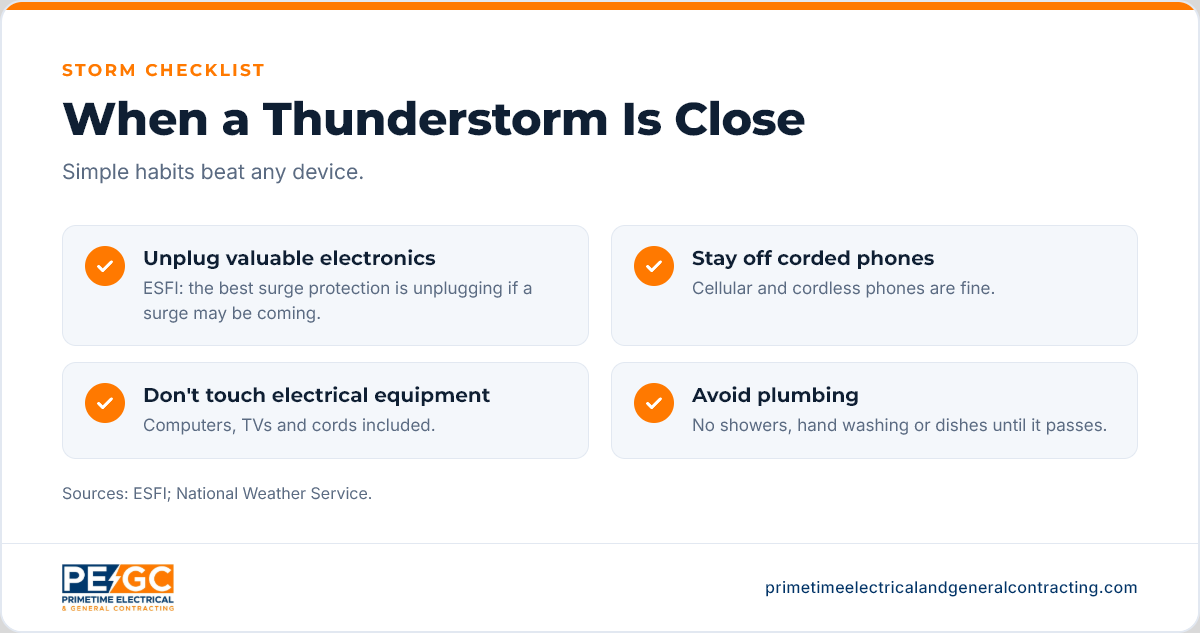
ESFI’s own advice for a storm you can see coming is old-fashioned and effective: the best surge protection is to unplug devices from the wall if you suspect a surge might be coming. The NWS adds a few indoor rules worth remembering during a thunderstorm: stay off corded phones, don’t touch electrical equipment such as computers, TVs or cords, and avoid plumbing, so no showers or dishes until it passes.
Is a whole-house surge protector required or worth it?
Recent editions of the National Electrical Code (starting with the 2020 edition) call for a surge protective device on the electrical service for new dwellings, and they apply the same expectation when service equipment is replaced. Which edition of the code your township enforces, and how it applies to your house, depends on the local adoption, so we always confirm with the building department before panel work rather than assume. If your home was built before that, nothing forces you to add one, but it’s one of the more affordable ways to protect everything on the system at once.
We usually suggest a whole-house device for homes that fit one or more of these descriptions:
- You have a lot of electronics. Home offices, smart-home gear, a finished basement theater, and expensive kitchen appliances all rely on sensitive circuit boards.
- Storms regularly roll through your area. Summer thunderstorms are a fact of life in Macomb and Oakland counties, and surges can arrive from the utility side as well as from your own appliances.
- You’re already working on the panel. If you’re replacing a panel or moving from 100 to 200 amps, adding protection at the same visit makes sense. Our 100-amp vs. 200-amp panel guide explains when that upgrade is worth it, and our breaker and panel upgrade service covers the work.
- You run a generator. A panel that already has backup power wired in is a natural place to add protection too. See our guide to sizing a whole-house generator if that’s on your list.
Signs a surge already hit your home
Surges don’t always announce themselves. After a storm, a flicker, or a utility outage, check for these signals:
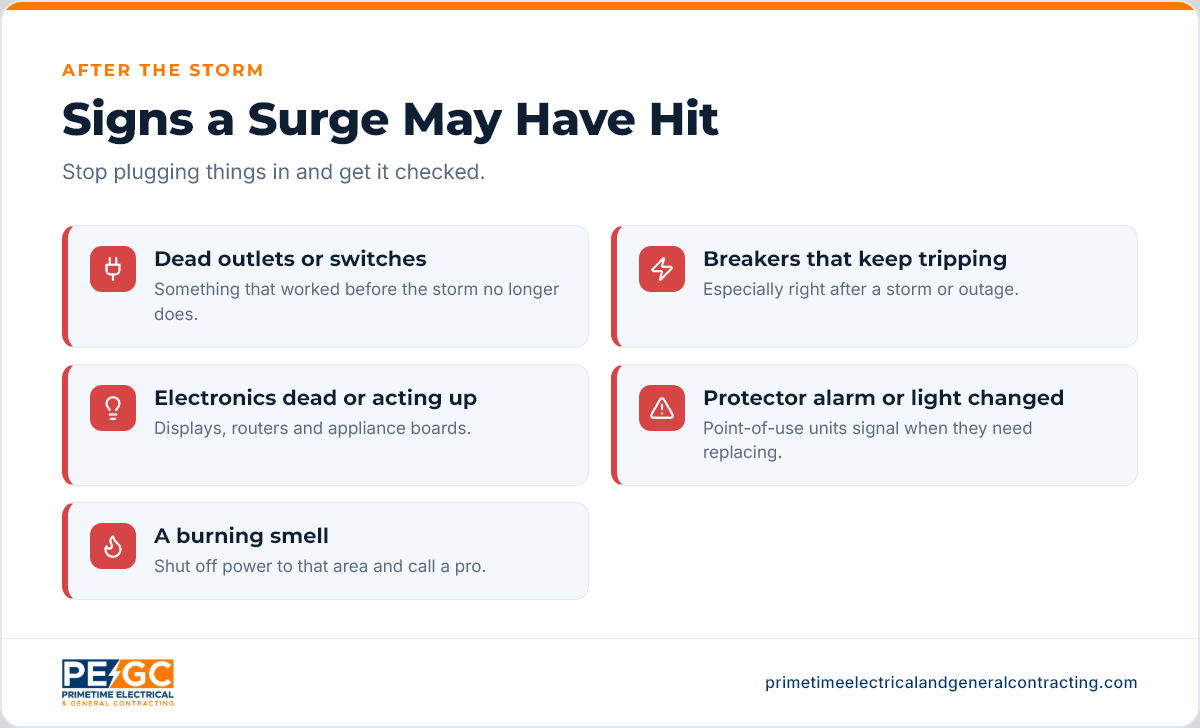
If any of those show up, stop plugging things in and have the system looked at. A dead outlet or a breaker that keeps tripping afterward can point to damage in the wiring itself, not just in your electronics. Our guide to tripping circuit breakers walks through the common causes, and our team handles electrical troubleshooting when the cause isn’t obvious.
Installing one: why this is a job for a licensed electrician
A service-entrance surge device connects at the main panel, where the service conductors are live. That’s not a place for guesswork. Panel work should be done by a licensed electrician who can size the breaker and conductors correctly, make the connections properly, and pull a permit where your township requires one.
Different devices also have different ratings and mounting styles. Some mount at the meter base, and others sit next to or inside the panel. We help you choose the right one for your service and your budget, and we won’t sell you a bigger device than your home needs.
We serve Sterling Heights and communities across Macomb and Oakland counties, including Warren, Clinton Township, Shelby Township and Macomb Township. See the full list on our service areas page.
Frequently asked questions
Is a power strip the same as a surge protector?
No. ESFI says power strips do not provide surge protection. A power strip only adds outlets. Look for a device that is clearly labeled as a surge protector.
Will a whole-house surge protector stop damage from a lightning strike?
Not a direct hit. ESFI says no surge protection device can handle a direct lightning strike, and the National Weather Service says typical surge protectors will not protect equipment from lightning. A whole-house device is designed to reduce the more common, smaller surges that travel through your wiring. If you are weighing the decision, we cover whether a whole house surge protector is worth it for a typical Macomb or Oakland County home.
Do I still need surge protectors at my TV and computer?
It helps. A whole-house device protects the system, including outlets and switches. A point-of-use protector adds a second layer for the electronics you value most. Choose one with an indicator light or alarm so you know when it needs to be replaced.
Should I unplug things during a thunderstorm?
If a storm is close, yes. ESFI says unplugging devices from the wall is the best surge protection when you think a surge may be coming.

Want to know what a whole-house surge protector would look like in your home? Call Primetime Electrical & General Contracting at (810) 397-2401 for a free estimate.