
When the power goes out in Sterling Heights after an ice storm, a generator feels like the obvious fix. The piece most homeowners overlook is how that generator connects to the house. If you want whole-house backup—or even a handful of critical circuits—you need a safe way to isolate utility power from generator power. That device is a transfer switch, or a listed mechanical interlock that does the same job.
So do you need a transfer switch for a whole-house generator? In short, yes. Connecting a generator straight into household wiring without proper transfer equipment is unsafe. The Electrical Safety Foundation International (ESFI) and the American Red Cross both warn against it.
Still sizing the unit itself? Start with our guide to how big of a generator you need for your whole house. For installation help, see our whole-house power generator service.
Why a transfer switch matters
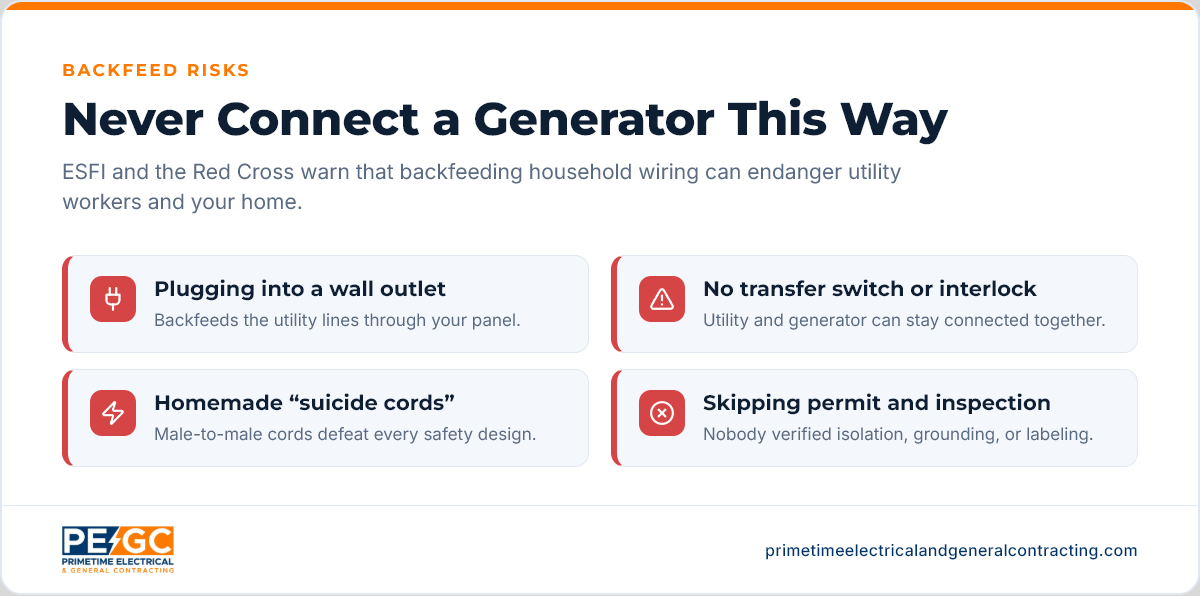
A transfer switch (or an approved interlock) prevents your home from being connected to the utility and the generator at the same time. Without that isolation, generator power can travel back out onto the utility lines—a condition called backfeeding.
ESFI is clear: do not connect a generator directly to household wiring without an appropriate transfer switch. Backfeed along power lines can electrocute anyone who contacts them, including utility lineworkers restoring service. The Red Cross gives the same warning: never try to power the house wiring by plugging a generator into a wall outlet, and if you want a permanent connection, have an electrician install a power transfer switch per the National Electrical Code and local rules.
That is why “suicide cord” or dryer-outlet backfeed tricks are never acceptable. They put your family, your neighbors, and utility crews at risk, and they can damage the generator when utility power returns.
Manual, automatic, or interlock?
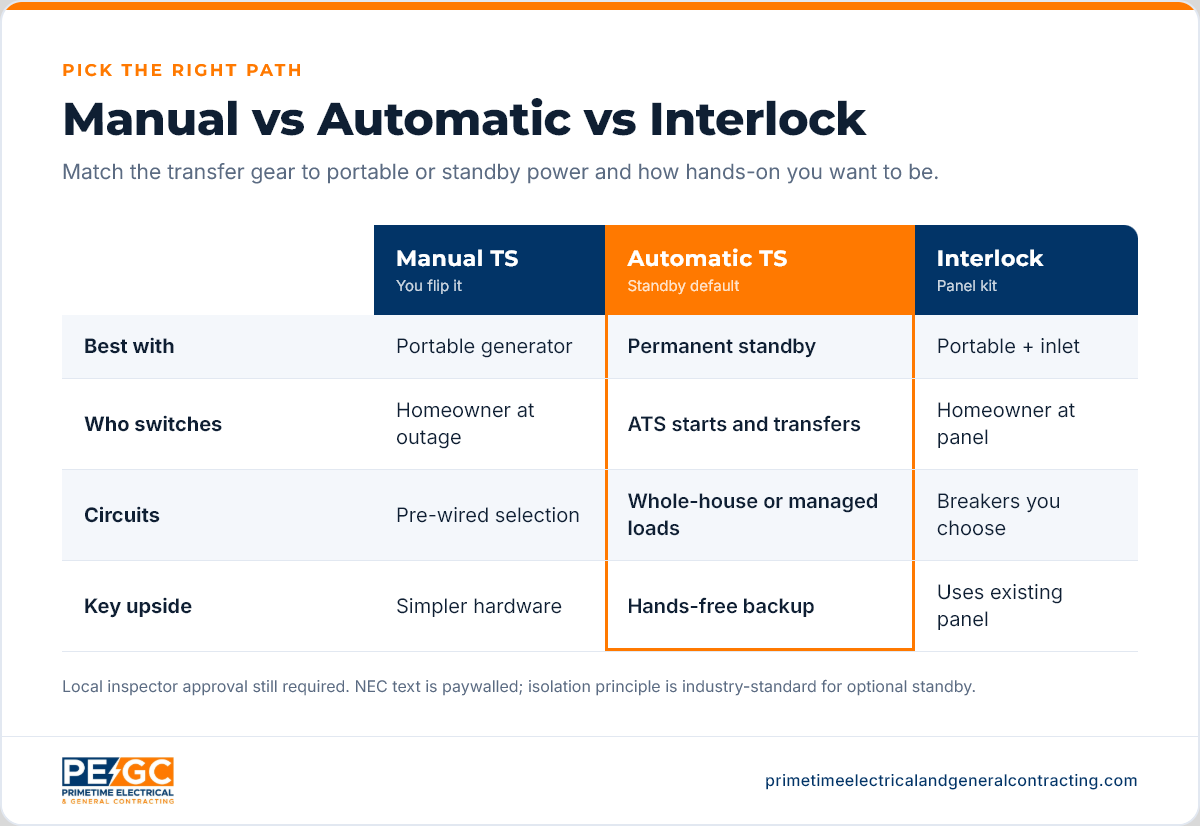
Homeowners usually choose among three code-minded approaches, based on portable vs. standby equipment, which circuits you need, and how hands-on you want to be during an outage.
- Manual transfer switch (MTS). You start the generator, then flip the switch to move selected circuits from utility to generator. Common with portable generators.
- Automatic transfer switch (ATS). Used with most permanent standby generators. When utility power drops, the ATS starts the generator and transfers the load; when utility returns, it transfers back and shuts the unit down.
- Mechanical interlock kit. A listed kit that mounts on a compatible breaker panel and physically prevents the main breaker and a generator breaker from being on together. Manufacturers such as Eaton describe interlock kits as meeting the optional-standby isolation idea in NEC Article 702. Your local inspector still decides what is approved for your panel and township.
Practical rule of thumb for Macomb and Oakland County homes:
- Portable generator + a few critical loads → often a manual transfer switch or listed interlock with an outdoor inlet.
- Permanent standby for whole-house or large-circuit backup → almost always an automatic transfer switch sized to the generator and the load.
- Older or full panels → pair the transfer work with a panel upgrade. Our 100-amp vs. 200-amp panel guide explains when service size is the limiting factor.
What “whole-house” actually means
“Whole-house generator” is partly marketing. Some systems back up every circuit; others use load-shedding so the generator is not asked to run everything at once. Either way, transfer equipment must match the generator’s output and how loads are selected. If the unit cannot carry the full panel, plan load management—or limit which breakers you turn on—before the next outage.
Michigan permits and inspections
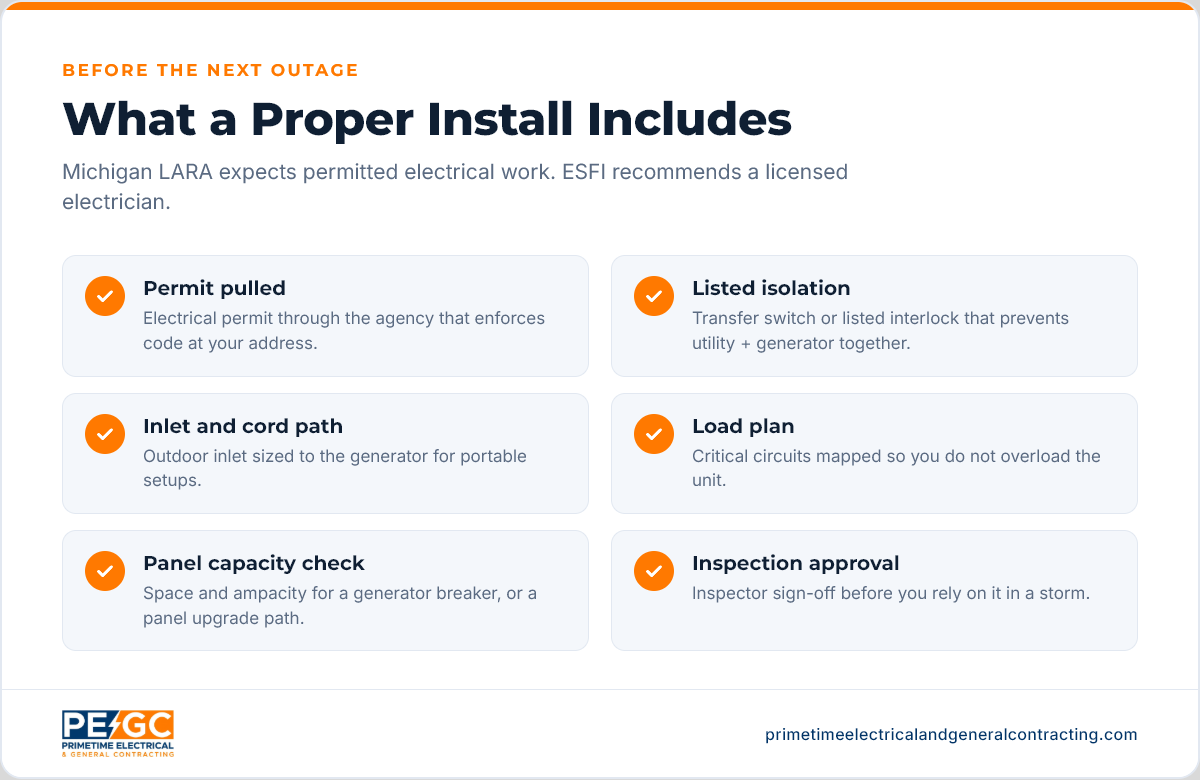
In Michigan, adding or altering electrical equipment generally requires an electrical permit through the enforcing agency for your address. Michigan’s Licensing and Regulatory Affairs (LARA) Bureau of Construction Codes says you should not equip a building with electrical conductors or equipment, or make additions to them, without a permit. Permits are typically pulled by a licensed electrical contractor. A narrow homeowner exemption exists for a single-family home you own and occupy, but transfer-switch work is not DIY-friendly, and ESFI strongly recommends a licensed electrician. Inspector approval is what authorizes connection.
Safe generator habits that still apply
Transfer equipment protects the grid connection. It does not remove carbon monoxide risk. Keep portable generators outdoors only, away from doors, windows, and vents, and maintain working CO alarms. Never run a portable unit in a garage, basement, or enclosed porch. Stay within the generator’s rated load, and shut loads off before you shut the generator down.
When to call Primetime
Call us when you want a transfer path that matches the generator you own—or the standby system you are planning. Homeowners in Sterling Heights, Warren, Clinton Township, Shelby Township, and nearby Macomb and Oakland County communities usually reach out when they are tired of extension cords through a door, want automatic backup for furnace/sump/fridge loads, have a full or outdated panel, or need an ATS with permit handling and inspection.
See our full list of towns on the service areas page, or request a free estimate. You can also call (810) 397-2401.
Frequently asked questions
Can I use a heavy-duty extension cord instead of a transfer switch?
Extension cords can power individual appliances plugged directly into a portable generator. They are not a substitute for connecting the generator to house wiring. Once you want wall outlets or hardwired loads on generator power, you need proper transfer equipment.
Is an interlock kit as safe as a transfer switch?
A listed interlock that mechanically prevents the main and generator breakers from being on together is designed for the same isolation function on optional standby systems. It must fit your panel, be installed correctly, and be accepted by your local inspector.
Do standby generators always need an automatic transfer switch?
Most permanent standby installs are designed around an ATS so the system can start and transfer without you standing at the panel in the dark. Your electrician will confirm switch rating, service configuration, and any load-management needs.